Er det virkelig farligt at løfte vægte?
"Jeg har overvejet at begynde med styrketræning, men jeg er bekymret for at blive skadet."
Det er en bekymring jeg tit har hørt, som bestemt er legitim at have.
De fleste mennesker forsøger at træffe fornuftige beslutninger om deres helbred. De vil gerne passe på deres kroppe, undgå unødvendige tilbagefald og reducere sandsynligheden for smerter eller skader. Hvis dit syn på styrketræning primært kommer fra sociale medier, hvor fokus ofte er på maksimale løft, ekstreme udfordringer og folk, der presser sig selv til deres grænser, er det let at forstå, hvorfor styrketræning kan virke skræmmende.
Problemet er, at mange mennesker sammenligner styrketræning med et imaginært alternativ, hvor der ikke er nogen risiko.
I virkeligheden er der ingen sådan mulighed.
Ethvert valg har konsekvenser. Spørgsmålet er ikke, om risikoen eksisterer. Spørgsmålet er, hvor denne risiko rent faktisk ligger.
Vi accepterer risiko alle andre steder
De fleste mennesker tøver aldrig med at løbe en tur, deltage i en fodboldkamp med venner, tilbringe en weekend med havearbejde eller hjælpe nogen med at flytte tunge ting. Alligevel indebærer alle disse aktiviteter en vis grad af risiko.
Når forskere sammenligner forskellige former for fysisk aktivitet, rangerer traditionel styrketræning konsekvent blandt de sikreste. Skadesrater anslås at være cirka 0,24-1 skade pr. 1.000 styrketræningstimer (1). Til sammenligning er rekreativ/motions løb forbundet med cirka 7-8 skader pr. 1.000 timer (1,2,3), mens holdsportsgrene som fodbold er rapporteret at producere alt fra 15 til mere end 80 skader pr. 1.000 timer (1).
Dette betyder ikke, at styrketræning er risikofrit.
Forskellige former for styrketræning udsætter folk for forskellige risikoniveauer. Valg af øvelser, teknisk kompleksitet, belastningsstrategier, træningsvolumen, træthedshåndtering og individuelle omstændigheder kan alle påvirke sandsynligheden for skader.
Det er en af grundene til, at coaching og gennemtænkt programdesign er vigtige.
Målet er ikke at eliminere risiko helt - det er nemlig umuligt i enhver fysisk aktivitet. Målet er at vælge øvelser, belastninger og træningsvolumener, der giver de størst mulige fordele, samtidig med at risikoen holdes på et acceptabelt niveau for den enkelte.
En nybegynder, en motionist, en konkurrenceatlet og en 65-årig pensionist har ikke nødvendigvis brug for de samme øvelser eller den samme træningstilgang. Hvad der er passende for én person, kan være unødvendigt krævende for en anden.
Forståelse af disse forskelle gør det muligt for trænere og personlige trænere at træffe smartere programbeslutninger, der balancerer udfordring, fremskridt og sikkerhed på lang sigt.
Alt, der involverer menneskelig bevægelse, er fuldstændig risikofrit.
Kroppen tilpasser sig
Menneskets fysiologi er bemærkelsesværdigt økonomisk. Kroppen justerer sig løbende i henhold til, hvad den skal gøre. Hvis en bestemt kapacitet er nødvendig, investerer kroppen ressourcer i at vedligeholde og forbedre den. Hvis denne kapacitet sjældent bruges, reducerer kroppen gradvist sin investering.
Et eksempel er vedligeholdelse af muskelvæv, hvilket kræver energi. Bevarelse af knogletæthed kræver belastning. Styrke, koordination, balance og bindevævets robusthed har alle en biologisk omkostning. Fra kroppens perspektiv er der dårlig grundlag til at vedligeholde dyre fysiske kvaliteter, der ikke bruges i dagligdagen.
Det er derfor, muskler bliver mindre, når de ikke udfordres og belastes. Det er derfor, knogletætheden falder, når belastningen forsvinder. Det er derfor, den fysiske kapacitet gradvist aftager, når livet ikke længere kræver det.
Kroppen fejler ikke. Den tilpasser sig. En overlevelsesmekanisme.
Mange mennesker antager, at aldring er den primære årsag til, at de bliver svagere med tiden. I virkeligheden er en stor del af det, vi forbinder med aldring, simpelthen konsekvensen af at bruge årtier på at bede kroppen om at gøre mindre og mindre.
Det moderne liv kræver ikke længere styrke
I det meste af menneskets historie var fysisk aktivitet uundgåelig. Folk bar vand, samlede mad, gik lange afstande, byggede ly og udførte fysisk krævende arbejde blot for at komme igennem dagen.
I dag er mange af disse krav forsvundet.
Mad bliver leveret direkte til vores dørtrin. Elevatorer og rulletrapper erstatter trapper. De fleste job kræver langt mere at sidde foran en computer end bevægelse. Dagliglivet er blevet bemærkelsesværdigt bekvemt.
Selvom dette utvivlsomt er en fordel ved det moderne samfund, skaber det en ny udfordring.
Kroppen fungerer stadig efter de samme biologiske principper, som den altid har gjort. Den forventer stadig en grund til at opretholde muskelmasse, styrke, knogletæthed og fysisk kapacitet. Miljøet er simpelthen holdt op med at give den grund.
Styrketræning kan derfor ses som en løsning på et moderne problem. Ikke fordi styrketræning på en eller anden måde er noget særligt, men fordi det erstatter en fysisk stimulus, som hverdagen ikke længere giver.
Styrke er en form for forsikring
Det interessante ved at opbygge styrke er ikke kun, at du bliver bedre til at løfte vægte i et fitnesscenter.
Du øger din fysiske kapacitet udenfor træningscenteret.
Tænk på noget så simpelt som at bære indkøbsposer hjem. For én person er opgaven næsten ubesværet. For en anden kræver den en stor indsats.
Poserne vejer præcis det samme. Forskellen er ikke opgaven. Forskellen er, hvor stor en del af personens samlede fysiske kapacitet opgaven kræver.
Det samme princip gælder, når du går op ad trapper, løfter en tung kuffert, rejser dig fra gulvet, leger med dine børn eller tilbringer en lang dag på benene.
Hverdagen stiller hele tiden fysiske krav. Jo større din kapacitet er, desto mindre bliver disse krav i forhold til det, din krop kan håndtere.
Det er her, styrke begynder at fungere som en form for forsikring.
Du opbygger en fysisk reserve.
Hvis en hverdagsting kræver næsten alt, hvad du fysisk har at give, er der meget lidt margin tilbage. Hvis den samme opgave kun kræver en mindre del af din kapacitet, har du langt mere at stå imod med.
Det gør ikke livet risikofrit.
Du kan stadig falde, blive syg, komme til skade eller opleve perioder, hvor din fysiske kapacitet falder.
Men du starter fra et bedre udgangspunkt.
Du bygger noget op, som du har råd til at miste
Det bliver særligt relevant, når vi bliver ældre.
Muskelmasse, styrke og fysisk funktion har en tendens til at falde med alderen. Hvor meget og hvor hurtigt afhænger blandt andet af vores aktivitetsniveau, men retningen er vanskelig helt at undgå.
Spørgsmålet er derfor ikke kun, hvor stærk du er i dag.
Det handler også om, hvor meget fysisk kapacitet du tager med dig ind i de kommende årtier.
Forestil dig to mennesker, der begge mister en del af deres styrke med alderen. Den ene har gennem mange år opbygget og vedligeholdt en stor fysisk reserve. Den anden starter allerede tættere på den kapacitet, som almindelige hverdagsopgaver kræver.
Begge kan blive svagere.
Men de har ikke nødvendigvis lige langt ned til det punkt, hvor deres fysik begynder at begrænse deres hverdag.
Det er måske en af de vigtigste grunde til at styrketræne:
Du bygger noget op nu, som du har råd til at miste noget af senere.
Målet er ikke at forhindre aldring. Målet er at bevare så stor en fysisk margin som muligt, så der går længere tid, før almindelige opgaver bliver krævende, og før manglende fysisk kapacitet begynder at bestemme, hvad du kan og ikke kan.
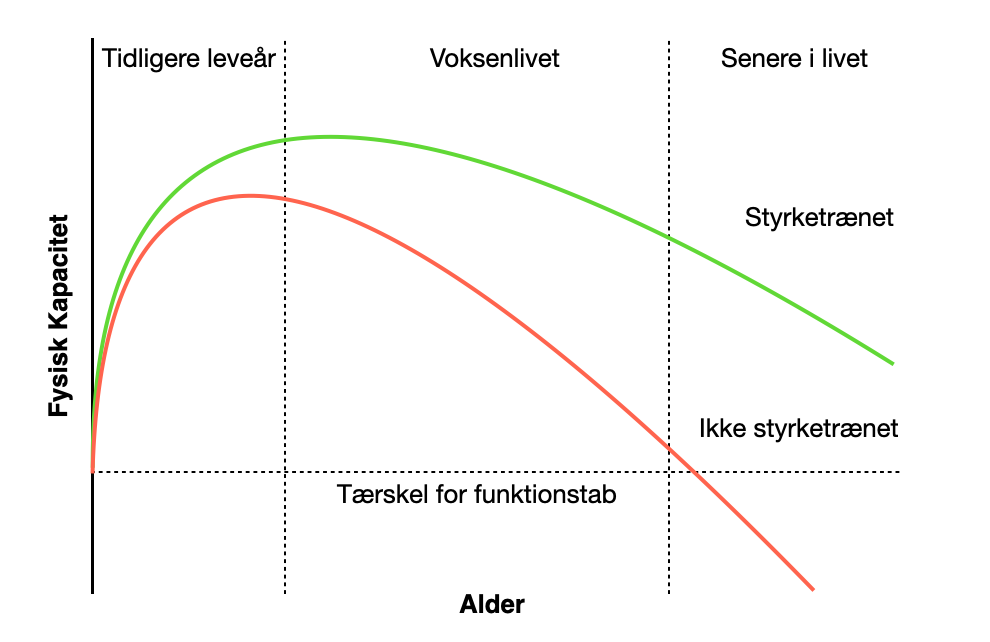
Styrketræning handler ikke kun om at blive stærkere nu. Det handler også om at opbygge og bevare den fysiske kapacitet, der gør det muligt at leve et aktivt og selvstændigt liv – også når du bliver ældre.
Fordelene rækker længere end fitnesscentret
Denne reserve handler ikke kun om at gøre hverdagen lettere.
En voksende mængde forskning peger på, at styrketræning også spiller en vigtig rolle for vores langsigtede sundhed. En stor metaanalyse fandt blandt andet, at deltagelse i styrketræning var forbundet med cirka 10-17 % lavere risiko for tidlig død samt lavere risiko for blandt andet hjerte-kar-sygdom og visse kræftformer (4).
Det betyder ikke, at styrketræning er en garanti mod sygdom eller et langt liv. Den slags sammenhænge skal fortolkes med forsigtighed.
Men styrketræning ser ud til at være et effektivt redskab til at bevare nogle af de fysiske kvaliteter, der bliver stadig vigtigere, jo ældre vi bliver: styrke, muskelmasse, knogletæthed og evnen til fortsat at klare hverdagens fysiske krav.
Det gør perspektivet større end, hvad der sker under selve træningen.
Målet behøver ikke være at kunne løfte imponerende vægte.
Målet kan ganske enkelt være at bevare en krop, der giver dig mulighed for at gøre de ting, du gerne vil, så længe som muligt.
Belastning er ikke nødvendigvis problemet
Det bringer os tilbage til bekymringen fra begyndelsen:
Hvad nu, hvis jeg bliver skadet af styrketræning?
Det er selvfølgelig muligt. Som jeg tidligere nævnte, så er ingen fysisk aktivitet uden nogen risiko.
Men det er vigtigt ikke kun at spørge, hvad der kan ske, hvis vi belaster kroppen. Vi bør også spørge, hvad der sker, hvis vi konsekvent undgår at gøre det.
Muskler, knogler, sener og andet væv tilpasser sig den belastning, de udsættes for. Når belastningen doseres passende og øges gradvist, giver vi kroppen en grund til at øge sin kapacitet.
Problemet er derfor sjældent belastning i sig selv.
Problemet opstår oftere, når belastningen overstiger det, kroppen aktuelt er forberedt på at håndtere, hvilket er er en vigtig forskel.
Målet med styrketræning er gradvist at flytte grænsen for, hvad den kan holde til over tid.
Fra skrøbelig til kapabel
Det perspektiv er særligt vigtigt for mennesker, der tidligere har oplevet smerter eller skader.
Efter en smertefuld episode er det forståeligt at blive mere forsigtig. Problemet opstår, hvis forsigtigheden gradvist bliver til en forestilling om, at kroppen skal beskyttes mod belastning for at holde sig rask.
For hvis kroppen aldrig udfordres, får den heller ingen grund til at øge sin kapacitet.
Modstandsdygtighed bliver ikke skabt ved hensynsløst at presse gennem smerte. Men den bliver heller ikke nødvendigvis skabt ved konsekvent at undgå alt, der føles udfordrende.
Den bliver opbygget gennem gradvis og passende eksponering for de ting, vi gerne vil være i stand til at håndtere.
Det gælder både fysisk og mentalt.
Når du oplever, at kroppen kan håndtere lidt mere, bliver du ikke kun stærkere. Du får også erfaring med, at kroppen kan tilpasse sig.
Over tid kan perspektivet derfor ændre sig fra:
Hvad skal jeg undgå for ikke at blive skadet?
til:
Hvad skal jeg gradvist blive bedre rustet til at kunne håndtere?
Risikoen ved ikke at træne
Det tager os tilbage til det spørgsmål, artiklen startede med.
Kan man blive skadet af styrketræning?
Selvfølgelig.
Men den relevante sammenligning er ikke mellem styrketræning og et liv uden risiko.
Den sammenligning findes ikke.
Det relevante spørgsmål er, hvordan den relativt lave risiko ved fornuftigt programmeret styrketræning skal vejes op imod konsekvenserne af gradvist at miste styrke, muskelmasse og fysisk kapacitet.
For kroppen tilpasser sig i begge retninger.
Når du regelmæssigt giver den en passende grund til at være stærk, forsøger den at tilpasse sig kravene.
Når kravene forsvinder, tilpasser den sig også til det.
Den største risiko er derfor ikke nødvendigvis, at kroppen bliver udsat for belastning. Det kan også være, at den gradvist mister evnen til at håndtere den.
Styrketræning handler i sidste ende ikke om at gøre kroppen uovervindelig.
Det handler om at gøre den mere kapabel.
At skabe større afstand mellem det, hverdagen kræver, og det, du fysisk kan.
Og at opbygge så meget fysisk reserve som muligt, før du en dag får brug for den.
References
Keogh JW, Winwood PW. The Epidemiology of Injuries Across the Weight-Training Sports. Sports Med. 2017 Mar;47(3):479-501. doi: 10.1007/s40279-016-0575-0. PMID: 27328853.
van Mechelen W. Running injuries. A review of the epidemiological literature. Sports Med. 1992 Nov;14(5):320-35. doi: 10.2165/00007256-199214050-00004. PMID: 1439399.
Videbæk S, Bueno AM, Nielsen RO, Rasmussen S. Incidence of Running-Related Injuries Per 1000 h of running in Different Types of Runners: A Systematic Review and Meta-Analysis. Sports Med. 2015 Jul;45(7):1017-26. doi: 10.1007/s40279-015-0333-8. PMID: 25951917; PMCID: PMC4473093.
Momma H, Kawakami R, Honda T, et al Muscle-strengthening activities are associated with lower risk and mortality in major non-communicable diseases: a systematic review and meta-analysis of cohort studies British Journal of Sports Medicine 2022;56:755-763.